Getting there and getting in
La Mercè basilica: before you go
The Basílica de la Mercè in practice: where it is, how to arrive, what the Baroque church looks like inside, what to bring and what is not allowed.
Book a seat under the dome ↗Quick answer
The Basílica de la Mercè stands on Plaça de la Mercè, 1, in Barcelona's Gothic Quarter. Show your ticket at the entrance; doors open 15 minutes early and late entry is allowed only between pieces. Inside is a Baroque nave with a dome. Food, pets and noise are not allowed, children need an adult, and guests mention warm air and fans in summer.
Where the basilica is
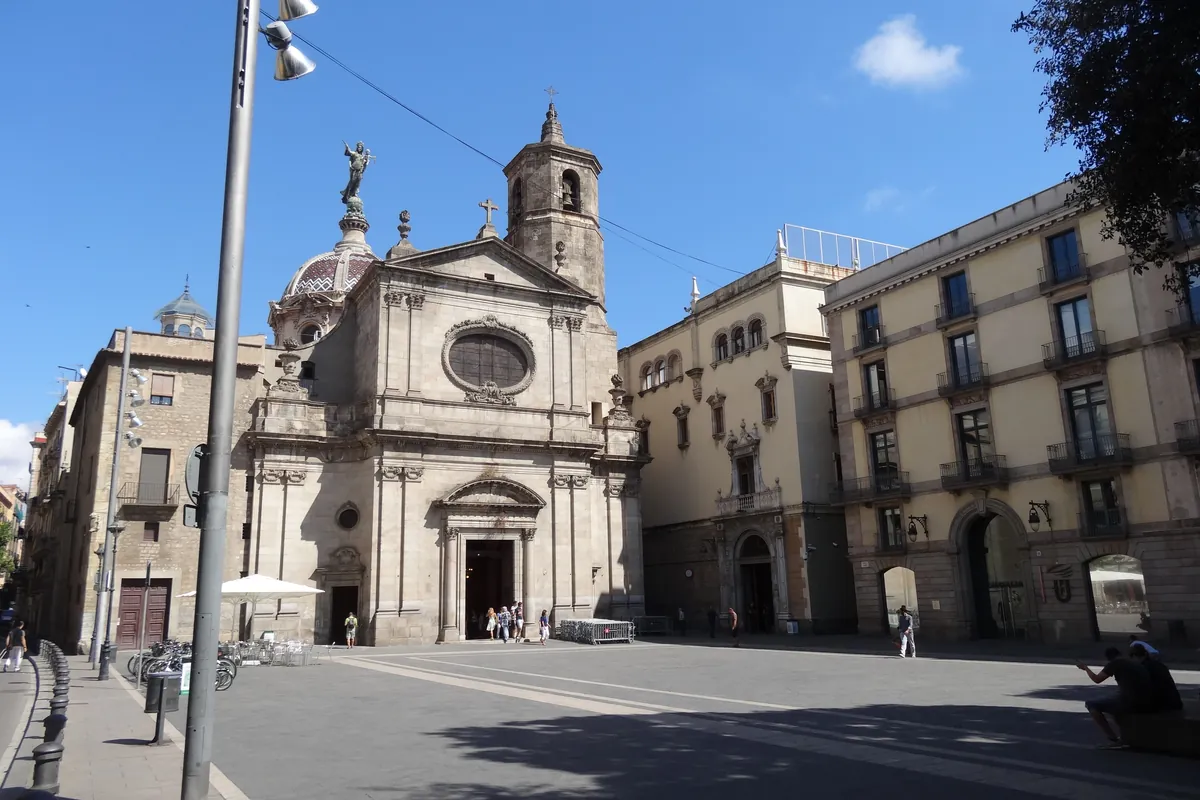
The basilica's address is Plaça de la Mercè, 1, 08002 Barcelona. It lies in the Gothic Quarter, the old-town core of the Ciutat Vella district, which sits between La Rambla and Via Laietana. The church's dome carries a statue of Our Lady that can be seen from the seaside promenade near the old shipyards, the drassanes. The quarter is a maze of narrow lanes that open into small squares, and the church stands on one of them. Its full name, Basílica de la Mare de Déu de la Mercè i Sant Miquel Arcàngel, names the Archangel beside the Virgin in its dedication. Do not confuse it with the Gothic cathedral, which is a separate church elsewhere in the quarter.
Getting there
Barcelona's tourism board lists the Drassanes metro station for the basilica, and it gives Estació de França as the Rodalies commuter station. Ordinary road traffic stays out of most of the Gothic Quarter, although taxis and service vehicles can enter, so the last stretch is on foot through the old lanes. If you arrive from La Rambla, you walk into the quarter from its western edge. Barcelona's tourism board suggests visiting around sunset to see the façade's sculpted details in soft light, a useful tip if you arrive early. Leave extra time for the lanes, which are narrow and busy in the evening. If you walk from the seafront, the statue on the dome is a useful landmark to steer by.
Arriving and getting in
The meeting point is the basilica entrance, where you show your ticket. Doors open 15 minutes early. Latecomers are let in, but only between compositions, so the performance is not disturbed. Guests suggest arriving early and queuing if you want the better seats within a section. The start time is on each date's calendar entry, and one guest reports a slight delay on their night, so do not plan a tight connection afterwards. Keep your confirmation open on your phone or printed, because staff at the door check tickets, and have the whole party ready together so the line moves quickly.
Inside the church
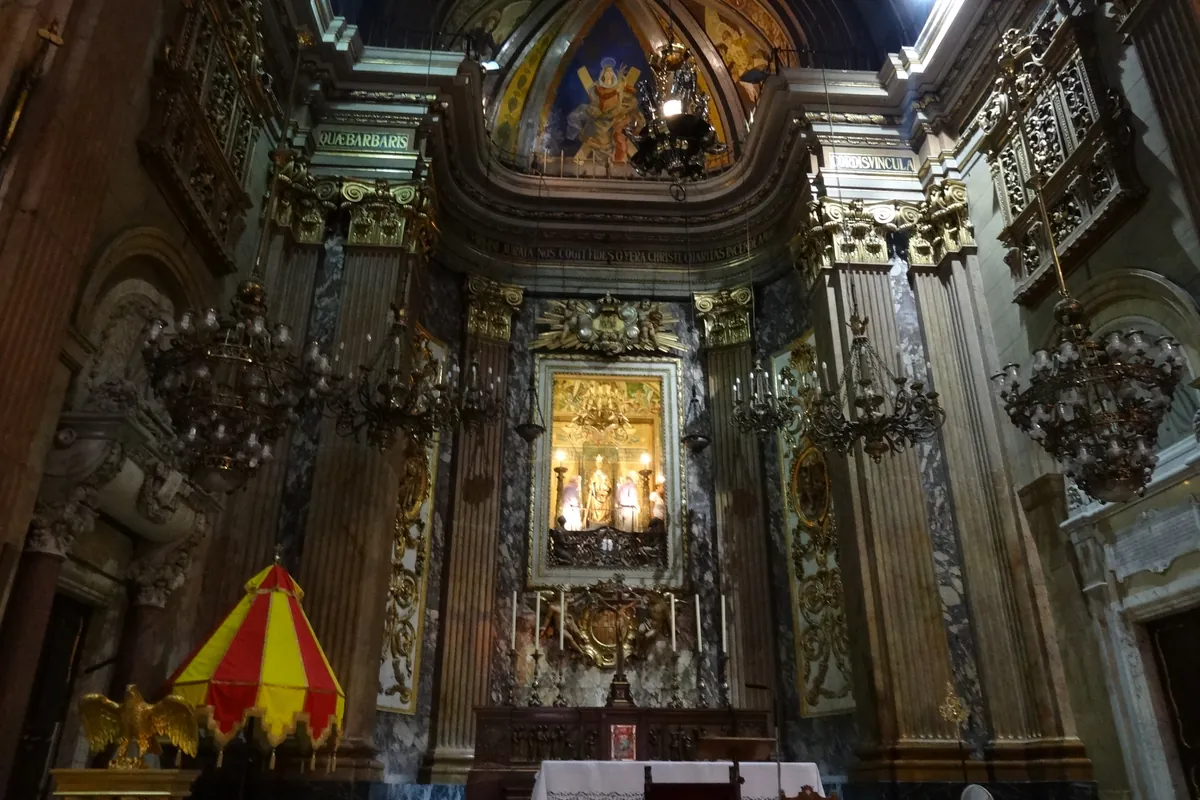
The basilica is Baroque, built between 1765 and 1775 to a design by the Catalan architect Josep Mas i Dordal. It has a single nave topped by a dome, with chapels along the sides, and Barcelona's tourism board mentions fine stonework and woodwork and an altarpiece. A string orchestra fills a room like this well, and guests praise the acoustics. The printed programme helps you follow the pieces, and the ticket's seat option decides how close you sit. The tourism board also mentions an organ that was restored and is played at occasional concerts. Photographs of the interior show a gilded high altar, richly decorated side chapels and a painted dome, so there is plenty to look at before the first note.
The Virgin of Mercy
The church has long housed the carved image of Barcelona's patron saint, Our Lady of Mercy, whom the city's council named patron in 1687. Spain's tourist board describes the image as a Gothic carving. The parish's own website explains that the church cares for devotion to the patron saint among Barcelonans and visitors, so remember that the concert takes place in a working church and behave as you would in any place of worship. A separate guide tells the story of the order, the vow of 1687 and the festival that carries her name, and it explains why the building matters so much to the city.
Read next: Our Lady of Mercy and Barcelona
Reading a Baroque church
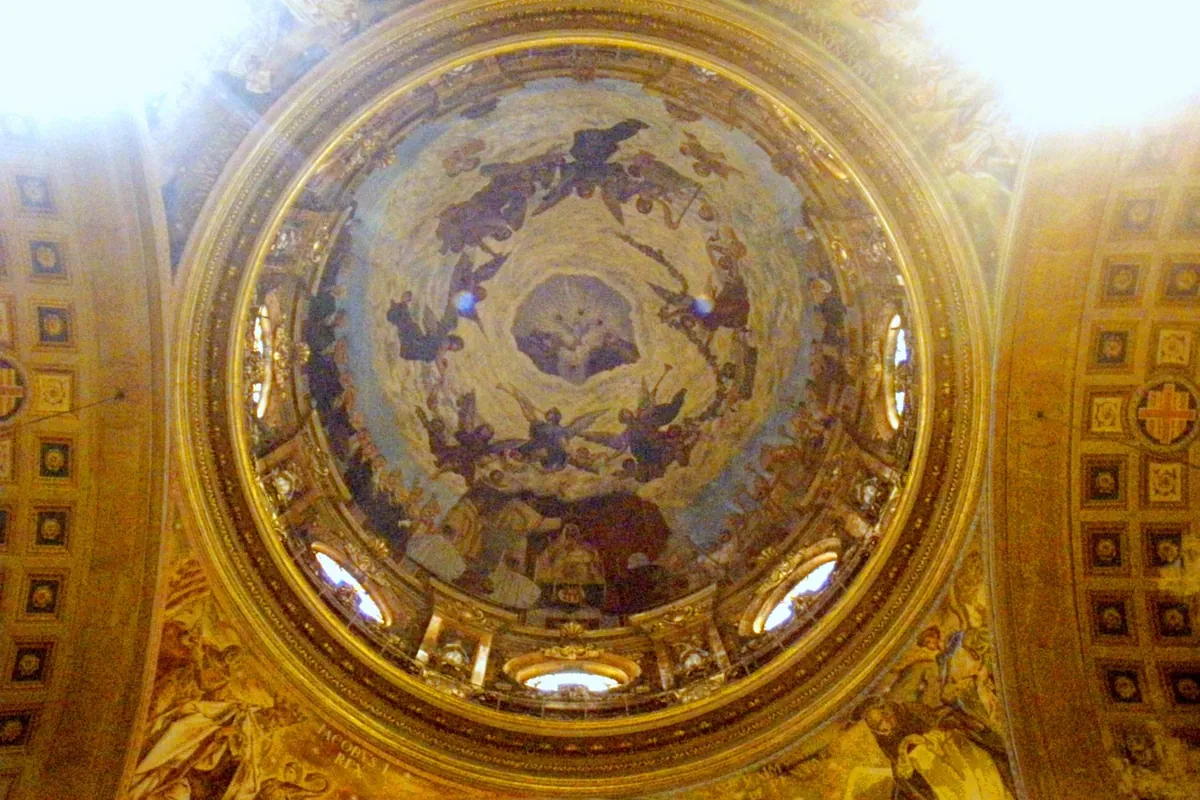
Baroque architecture began in Italy in the late 16th century and was promoted by the Catholic Church to inspire awe in congregations. Its hallmarks are dramatic light that falls from cupolas, gilding and ornament in nearly every space, and curved forms that suggest movement. Look up when you sit down: the dome is where the light comes in. The basilica's façade ornament is the work of Carles Grau, a detail that Amics de la Rambla singles out. The style lasted from the late 16th to the 18th centuries, so this church is a late example, put up in the later 1700s.
The earlier churches and the convent
The present church replaced a medieval church built between 1249 and 1267, the first church of the Order of Mercy, which was enlarged in Gothic style in the 14th and 15th centuries. The community later decided to demolish it and build a new church, completed between 1765 and 1775. The state confiscated the convent in 1835, and since 1846 it has housed the headquarters of the Captaincy General of the Fourth Military Region. Between 1808 and 1814, during the Peninsular War, the church and convent were looted. That history explains why a large public building stands beside the church, and why the square has the layout it has today.
A working church
The basilica is a parish church first. Its website lists baptism, reconciliation and the anointing of the sick among its services, and it invites visitors to light a candle. It also offers a virtual visit of the building, recreated by the architect David Laudo, which is a useful way to see the nave before you book. Because the concert happens in a living place of worship, the church's rules apply: stay quiet, treat the space with respect and keep phones on silent. Dress as you would for any church visit.
Comfort, access and children
Churches are seldom air-conditioned, and guests mention warm air and fans in the nave, so dress lightly in summer and carry a thin layer for cooler months. Food, pets and making noise are not allowed, which covers talking during the music and rustling programmes. Wheelchair access is listed for the concert, but nothing describes the route into the church, so put specific questions to the booking site before you buy. Unaccompanied minors are not admitted, so any child needs an adult beside them for the whole hour. If the weather is hot, drink water before you go in, since you cannot bring drinks or food into the church.
After the concert
The basilica stands in the old town, so you can carry on the evening on foot. The Gothic Quarter has squares, a cathedral and lanes to wander, with La Rambla along its western edge. A separate guide covers what the quarter is and how much of it was restored in the 19th and early 20th centuries. Because the concert lasts about an hour, you can book a table elsewhere in the old city for the evening and still make the doors. Check your route home before you go, since the lanes are not served by ordinary road traffic.
Read next: Gothic Quarter after the concert
Who this isn't for
Pass on the evening if you want to tour the basilica, because the ticket buys a concert. It does not suit anyone who needs air conditioning, who cannot sit for an hour or who wants to eat during the music. Nor is it right for a Gothic church: the present building is Baroque, and only the order's earlier medieval church was Gothic. Anyone who prefers a large concert hall and a full orchestra should look elsewhere in the city.
Frequently asked questions
What is the basilica's address?
Plaça de la Mercè, 1, 08002 Barcelona, in the Gothic Quarter.
When was the church built?
The present Baroque church was built between 1765 and 1775, to a design by Josep Mas i Dordal.
Is it the Gothic cathedral?
No. The cathedral is a separate church. La Mercè is a Baroque basilica on Plaça de la Mercè.
Is it warm inside?
Guests mention warm air and fans in summer. Wear light clothes and bring a thin layer for cooler months.
What is not allowed?
Pets, food, unaccompanied minors and making noise are not allowed.
Is there a printed programme?
Yes. A printed concert programme is part of the ticket.
Sources